Olympic or standard bars, UK
Olympic and standard bars are different sleeves and plate holes. How to avoid buying plates that do not fit a UK home bar.
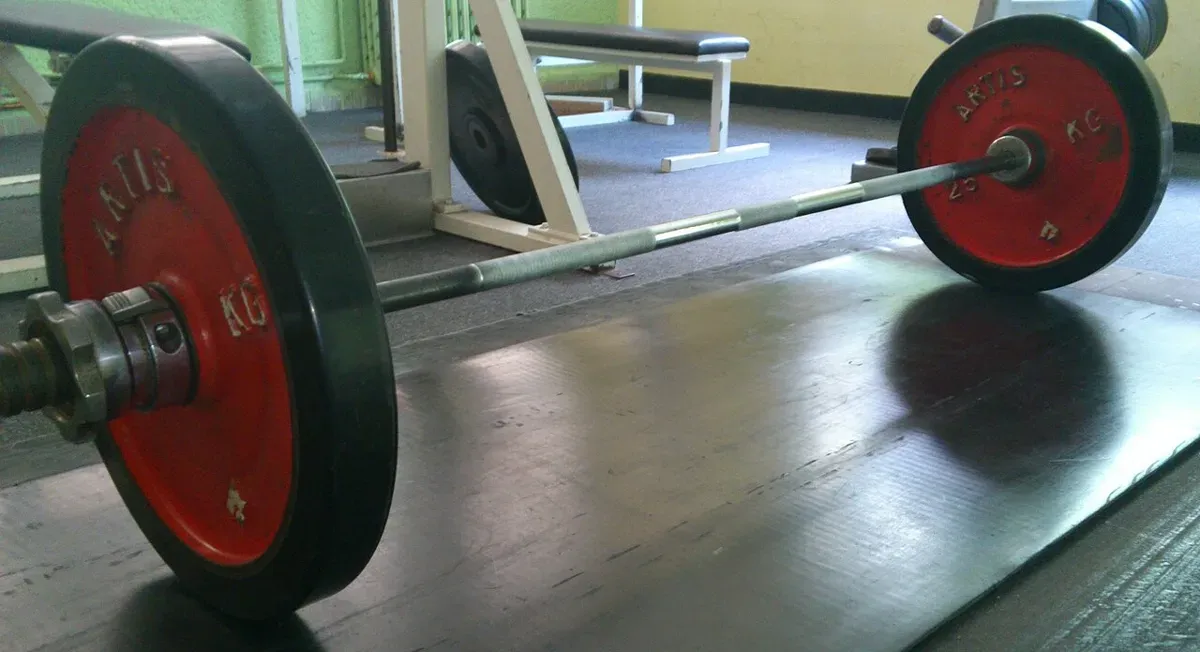
Example of a barbell.
Photo: Tomáš Pilík / Wikimedia Commons, CC BY-SA 3.0

Affiliate searches
Our top picks
Short reads of the searches this guide actually uses. The button checks the live Amazon UK price. Nothing here is a lab score.
Example of a barbell.
Photo: Tomáš Pilík / Wikimedia Commons, CC BY-SA 3.0
Best for A bar you can log honestly
Olympic barbells
An IWF men's bar is 20 kg, 220 cm, with a 28 mm shaft and 50 mm sleeves. A home listing must state its own numbers.
- IWF men's bar20 kg, 220 cm
- Shaft28 mm
- Sleeves50 mm
Good for
- Plates and logs match the gym
- The standard people mean by Olympic
Skip if
- Long for a narrow garage
- The word Olympic is not a weight
Figure check: IWF equipment
Check price on AmazonExample of a barbell.
Photo: Tomáš Pilík / Wikimedia Commons, CC BY-SA 3.0
Best for A thinner grip
15 kg Olympic bars
The IWF women's bar is 15 kg and 201 cm, with a 25 mm shaft. Log 15 kg, not 20.
- IWF women's bar15 kg, 201 cm
- Shaft25 mm
- Sleeves50 mm
Good for
- Thinner grip
- Slightly shorter
Skip if
- Easy to mis-log as 20 kg
- Not every lighter bar is this spec
Figure check: IWF equipment
Check price on Amazon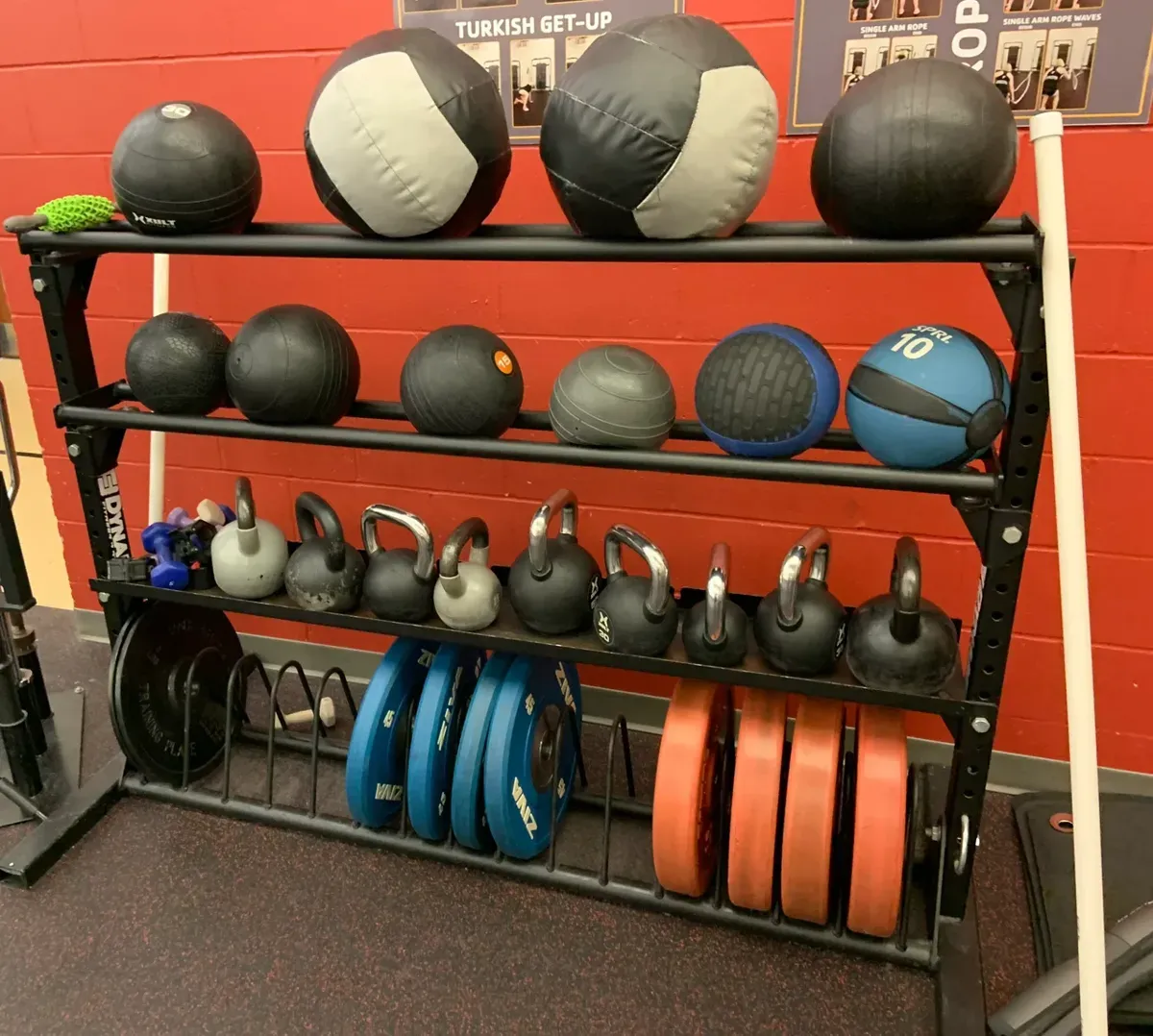
Example of a weight plate.
Photo: Wikideas1 / Wikimedia Commons, CC0

Best for Slow lifts you lower
Cast-iron Olympic plates
Cast iron is compact and usual for squats, presses, and deadlifts you lower. Do not drop it.
- HoleConfirm 50 mm
- ProfileThin
- CareWipe it in a damp garage
Good for
- More weight on the sleeve
- Takes less space
Skip if
- Loud and hard on floors
- Chips if you drop it
In pictures
Examples, not the listing.
These are Commons photographs of the kind of kit. None of them is the exact item behind a buy button.
Example of a barbell.
Photo: Tomáš Pilík / Wikimedia Commons, CC BY-SA 3.0
Example of a barbell.
Photo: Eamonn Leaver / Wikimedia Commons, CC BY 2.0

Example of a barbell.
Photo: dronepicr / Wikimedia Commons, CC BY 2.0

Example of a barbell.
Photo: RickyBennison / Wikimedia Commons, CC0

Olympic and standard are not two moods of the same bar. They are different sleeve diameters, which means different holes in the plates. Buy the wrong pair and the plates either fall through or do not go on. This page extends the barbell guide. Fitness Options does not sell bars or plates in the feed we use. There is no photo of a bar from them on this page, and there should not be.
What Olympic means here
On an IWF bar, the equipment specification is a 50 mm sleeve. A men’s bar is 20 kg and 220 cm with a 28 mm shaft. A women’s bar is 15 kg and 201 cm with a 25 mm shaft. Home “Olympic” bars often copy the 50 mm sleeve and then vary the weight, the length, and the shaft. The word Olympic on a box is not the IWF bar. Read the printed kilograms and the sleeve. If the sleeve is about 50 mm, you need plates with a 50 mm hole. Search an Olympic barbell and, if the empty bar should be 15 kg, a 15 kg Olympic bar. Confirm the listing. We have not measured the bar in your tab.
A 220 cm bar needs a floor side longer than 2.2 m, and it needs a rack or stands if you will squat or bench it alone. The rack explainer and the low-ceiling page are the height. One example half-rack listing is 216.4 cm. Yours must print its own.
What standard means here
Standard, in UK home-gym adverts, usually means a thinner sleeve, often about 25 mm or 1 inch, with plates drilled to match. The shaft and the sleeve get talked about as if they were the same measurement. They are not. A 28 mm shaft can still have a 50 mm sleeve. A “1 inch bar” needs 1 inch plates. Those plates will not fit a 50 mm Olympic sleeve. A set that says “standard bar and plates” can be a coherent set and a dead end, because you cannot add Olympic bumpers later without replacing the bar.
If you already own plates, measure the hole before you buy the bar. If you already own the bar, measure the sleeve before you buy plates. A tape is enough. Do not trust the word in the title.
Plates and collars
Iron plates if you lower the bar. Bumpers if you drop it, and only onto flooring that can take the drop. The flooring guide is the thickness. Search iron plates and bumper plates as separate problems from the bar. A “100 kg set” that hides the bar weight inside the total is how logs go wrong. Collars are not optional. Search barbell collars that match the sleeve you measured, not the sleeve you hope you bought.
Fractional plates matter more than a stack of large plates you cannot jump between. They are in the barbell guide. They are also not in the Fitness Options feed.
Racks that say Olympic
A rack can be sold as Olympic because the uprights and the bar path assume a 50 mm bar, or because the word tested well in a search. The York half rack in the Fitness Options feed is named as an Olympic half rack. That does not put a bar in the box. If you open their picks page, you are looking at the rack. Buy the bar with a stated sleeve. The cost page will not add the rack and the bar into one figure for you.
A used bar
A used Olympic bar and a used standard bar fail in the same ways: bend, sleeve play, destroyed knurl, and plates that were “included” and do not fit. Roll it. The second-hand checklist is the inspection. There is no affiliate link for a specific used bar, because we cannot see it.
Buy one system. Write the sleeve size on a label if you own both, so the next plate search does not undo the first.
A buying order that avoids the mismatch
Decide the sleeve before you open a plate listing. If you want to add bumpers later, or use a rack sold around a 50 mm bar, start with an Olympic sleeve and accept that a standard set in the garage is a different sport. If you already own a standard bar and the plates fit, stay there until the bar is the thing that limits you. Replacing both at once is the under £1,000 conversation, after the ceiling is measured, not an afternoon of mixed holes.
On the day the bar arrives, measure the sleeve again. Listings are wrong often enough that the tape is the product. Then buy collars that clamp that sleeve, and one pair of plates you can lift, not a stack that looks like a gym. Fractional plates matter when the jump of 5 kg is the whole session. The barbell guide has the search links. The rack page is where the bar has to go if you squat it. A York rack at Fitness Options does not include this decision. Their feed has no bars and no plates. The cost page will not add a bar to a rack for you.
Write the system on a card: Olympic 50 mm, or standard, and the stamped bar weight. Put the card with the collars. The next time you shop, you will not have to remember which hole you own. That card is worth more than a second bar.
Compare the picks
| Our pickOlympic barbells | Also look15 kg Olympic bars | Also lookCast-iron Olympic plates | Also lookBumper plates | |
|---|---|---|---|---|
| Best for | A bar you can log honestly | A thinner grip | Slow lifts you lower | A bar you drop |
| Headline figure | 20 kg | 15 kg | See the listing | See the listing |
| Good for | Plates and logs match the gym | Thinner grip | More weight on the sleeve | Made to be dropped |
| Skip if | Long for a narrow garage | Easy to mis-log as 20 kg | Loud and hard on floors | Bulky |
| Price | Check price on Amazon | Check price on Amazon | Check price on Amazon | Check price on Amazon |
Common questions
Does Fitness Options sell the bar?
Not in the feed this site uses. They sell some racks. The bar and the plates are a different shop search, and the sleeve still has to match.
Affiliate searches
Also on the list
The same kind of tile, for the other searches in this guide.
Example of a weight plate.
Photo: Wikideas1 / Wikimedia Commons, CC0
Best for A bar you drop
Bumper plates
Bumpers are the plates for drops, on thick rubber, on concrete. They take more floor for the same weight.
- Hole50 mm Olympic
- DiameterLarger than iron
- FloorThick rubber, concrete
Good for
- Made to be dropped
- The bar sits higher off the floor
Skip if
- Bulky
- Not a licence to drop upstairs
Example of a barbell.
Photo: Tomáš Pilík / Wikimedia Commons, CC BY-SA 3.0
Best for Plates that stay put
Barbell collars
Buy a pair with the bar and use them. Spring clips are fast. Screw collars stay put.
- NeedOne pair
- SpringQuick, can loosen
- ScrewSlower, more secure
Good for
- Stops a plate walking off
- Part of the bar, not an extra
Skip if
- Clips can slip
- Heavy contest collars change the logged weight